By late October, Cincinnati homeowners face rapidly cooling temperatures and the onset of early freeze risks. In the Greater Cincinnati area (USDA Hardiness Zone 6b), late October is the critical window to shift from general autumn chores to hard winterization before the first deep freeze hits in November.
Focusing on these key areas will protect your home, lawn, and wallet over the season:
1. Exterior Plumbing & Irrigation
-
Disconnect Outdoor Hoses: Unhook all garden hoses, drain them, and store them indoors or in a shed. Leaving a hose connected traps water inside the spigot, which can freeze, expand, and crack your outdoor pipes inside your walls.
-
Shut Off & Drain Outdoor Spigots: Turn off the interior shut-off valves for outdoor hose bibbs, then open the exterior spigot to let any trapped water drain out. Install insulated frost caps over hose bibbs for added protection.
-
Blow Out Sprinkler Systems: Schedule or complete an irrigation system blowout. Compressed air removes residual water from pipes, valves, and backflow preventers to prevent costly cracked fittings in spring.
2. Gutters, Drainage, & Roof Prep
-
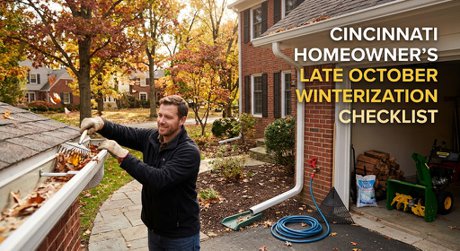
Clear Leaves & Debris: Cincinnati's mature tree canopies drop a massive volume of foliage throughout October. Clean out gutters and downspouts thoroughly once most leaves have fallen.
-
Prevent Ice Dams: Clogged gutters cause standing water to freeze, leading to ice dams that back up under shingles and damage roof structures or ceilings during winter thaws.
-
Direct Downspouts Away: Ensure downspout extensions drain water at least 3 to 5 feet away from your foundation. Cold winter rain or melting snow pooling near your foundation can cause basement leaks or structural cracking when the ground freezes.
3. HVAC, Fireplaces, & Energy Efficiency
-
HVAC Maintenance: Swap out your furnace air filter and schedule an annual HVAC tune-up. Testing your heat before cold snaps guarantees your system operates safely and efficiently when needed most.
-
Seal Drafts & Air Leaks: Check weatherstripping and caulking around exterior doors and window frames. Sealing drafts keeps heating bills down during cold Ohio winter snaps.
-
Chimney Inspection: If you have a wood-burning fireplace, have the chimney professionally inspected and swept to clear out creosote and debris before the season's first fire.
4. Lawn Care & Garden Prep
-
Final Mow & Mulching: Keep mowing until cool-season grasses (like Kentucky Bluegrass or Fescue) stop growing. Drop your mower height slightly for the final cut (around 2.5 inches). Mulch fallen leaves into fine pieces with your mower to add organic nutrients back to the soil rather than letting a thick layer smother the turf.
-
Late-Fall Fertilization: Late October is an ideal window to apply a winterizer fertilizer high in nitrogen. This promotes deep root growth over the winter so your lawn springs back quickly in March.
-
Protect Vulnerable Plants: Cover delicate perennials or young shrubs, and apply a fresh 2–3 inch layer of mulch over garden beds to insulate root systems.
5. Home Safety & Winter Readiness
-
Test Alarms: Test smoke detectors and carbon monoxide detectors, and replace batteries as needed. CO risk spikes during winter when doors and windows remain closed and furnaces run continuously.
-
Snow Equipment Preparation: Pull out snow shovels, ice melt/salt, and your snowblower. Gas up and test run the snowblower now to avoid scrambling during the season's first surprise snowfall.
-
Outdoor Patio Gear: Clean, cover, or store patio furniture, grills, and outdoor pots in a garage or shed to prevent freeze-thaw cracking.